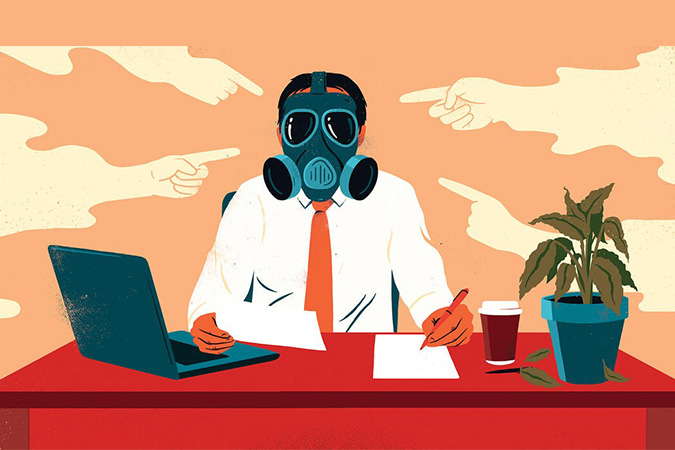
In today's competitive professional landscape, many individuals find themselves caught in toxic work environments where they are treated more like objects than valued employees. This disturbing trend is often perpetuated by superiors who constantly shift the goalposts, leaving employees feeling perpetually inadequate and mentally harassed.
In such environments, employees are subjected to a relentless cycle of unrealistic expectations and ever-changing targets. Superiors, driven by bottom-line priorities or a misguided sense of leadership, fail to recognize the human element within their workforce. Instead, employees are reduced to mere instruments for achieving corporate goals, devoid of empathy or consideration for their well-being.
One of the most damaging aspects of this objectifying environment is the constant sense of inadequacy it fosters among employees. No matter how hard they work or how much they achieve, they are never deemed "enough" by their superiors. The goalposts are continually moved, creating a perpetual state of dissatisfaction and anxiety.
This relentless pressure takes a significant toll on employees' mental health. Constantly feeling undervalued and unappreciated erodes their self-esteem and confidence. Many find themselves trapped in a cycle of self-doubt and self-blame, unable to escape the toxic dynamics of their workplace.
Moreover, the lack of psychological safety in such environments exacerbates the problem. Employees fear retribution or retaliation if they speak up about their experiences or attempt to challenge the status quo. This culture of silence further perpetuates the cycle of mental harassment and objectification.
It's crucial for organizations to recognize the destructive impact of objectifying their employees and perpetuating toxic work environments. Employers must prioritize creating a culture of respect, empathy, and appreciation within the workplace. This involves fostering open communication, providing meaningful feedback, and valuing employees as individuals with unique strengths and contributions.
Additionally, it's essential for employees to recognize their worth and assert their boundaries in the face of objectifying behavior. This may involve setting clear expectations with superiors, seeking support from colleagues or HR, or even exploring opportunities for career advancement outside of the toxic environment.
Ultimately, addressing the pervasive issue of objectification and mental harassment in the workplace requires a concerted effort from both employers and employees. By fostering environments that prioritize respect, empathy, and psychological safety, organizations can create healthier and more productive workplaces for all.